
February 26
The saints and feasts remembered on February 26, each with a short life, a Bible passage and a prayer.
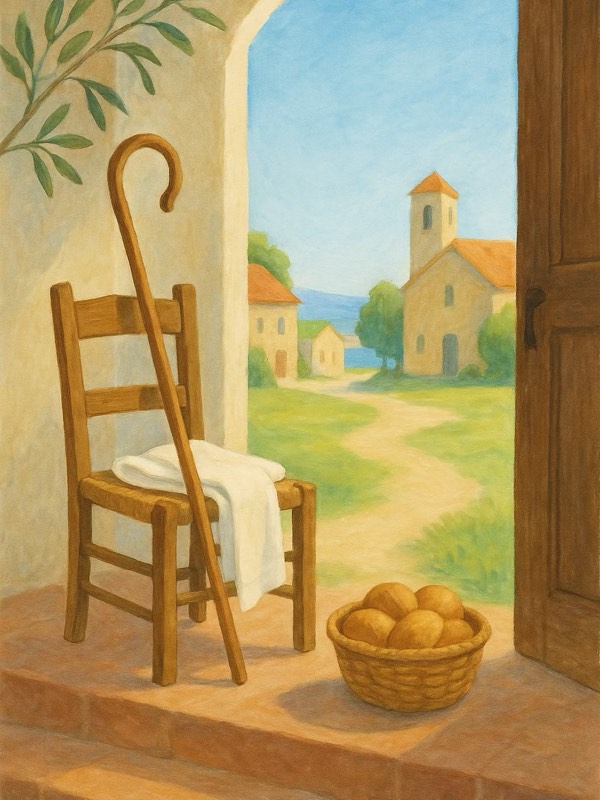
Saint Porphyry of Gaza
Monk turned bishop who led the small Christian minority of pagan Gaza
Porphyry was bishop of Gaza, in the Holy Land, around the year 400. Almost everything we know about him comes from a Life attributed to his deacon Mark, which many scholars think was reworked or partly composed later, so its details are uncertain.
According to that Life, he came from a wealthy family in Thessalonica, in Greece, and lived as a monk in Egypt and near the Jordan. Illness left him barely able to walk; he gave away his inheritance and supported himself in Jerusalem by working with leather. He was ordained a priest there and, in 395, became bishop of Gaza.
Most people in Gaza still worshipped the old gods, and the small Christian community faced hostility. With the emperor’s backing, the great temple of the god Marnas was destroyed in 402 and a church built on its site — a forced end to pagan worship that many readers find troubling. Porphyry died in 420 and is remembered as a pastor who held together a small, struggling church.
But He said to me, “My grace is sufficient for you, for My power is perfected in weakness.” Therefore I will boast all the more gladly in my weaknesses, so that the power of Christ may rest on me. That is why, for the sake of Christ, I delight in weaknesses, in insults, in hardships, in persecutions, in difficulties. For when I am weak, then I am strong.
2 Corinthians 12:9–10 · BSB
A prayer
God of mercy, you called your servant Porphyry from wealth to poverty and gave him strength in weakness to care for a small and struggling church. Teach us to trust your grace when we are weak, to serve those entrusted to us with patience, and to seek your kingdom with humble hearts. Through Jesus Christ our Lord. Amen.
The lives are written with AI help from public-domain histories and checked before publishing; the prayers are ours. Bible quotations are from the Berean Standard Bible (BSB), in the public domain. How we write.