November 17
The saints and feasts remembered on November 17, each with a short life, a Bible passage and a prayer.
Saint Elizabeth of Hungary
Hungarian princess who spent her wealth and short life caring for the sick
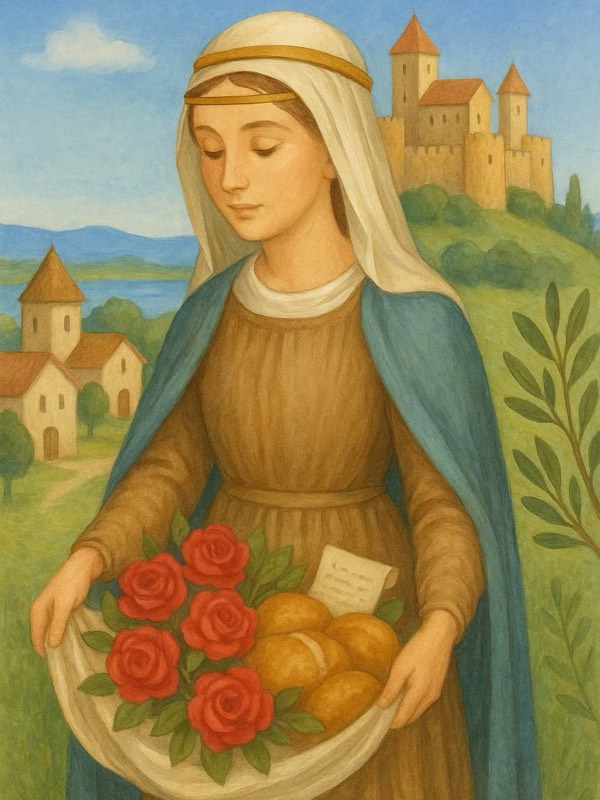
Elizabeth was born in 1207, a daughter of King Andrew II of Hungary. At about four she was sent to the Wartburg castle in Thuringia, Germany, to grow up beside Ludwig, the boy she would marry. They wed when she was fourteen and had three children, and their marriage was remembered as a happy one.
Moved by the first Franciscan friars in Germany, Elizabeth gave generously. During the famine of 1226 she handed out grain from the castle stores and set up a hospital below the castle, which annoyed some at court. In 1227 Ludwig died of illness on his way to a crusade. Widowed at twenty, she left court life, settled in Marburg and used the money settled on her as a widow to build a hospital, where she nursed the sick with her own hands. She died there in 1231, aged twenty-four.
She was declared a saint only four years later. A later legend tells of bread turning into roses, but her lasting mark is the many hospitals and charities that bear her name.
For I was hungry and you gave Me something to eat, I was thirsty and you gave Me something to drink, I was a stranger and you took Me in, I was naked and you clothed Me, I was sick and you looked after Me, I was in prison and you visited Me.’
Matthew 25:35–36 · BSB
A prayer
God of mercy, you gave Elizabeth of Hungary eyes to see Christ in the hungry and the sick, and she gladly gave up comfort and rank to serve them. Open our eyes to the needs around us, and make us generous with what we have and with who we are. Amen.
Saint Hilda of Whitby
Abbess of Whitby who trained bishops and encouraged England’s first known poet
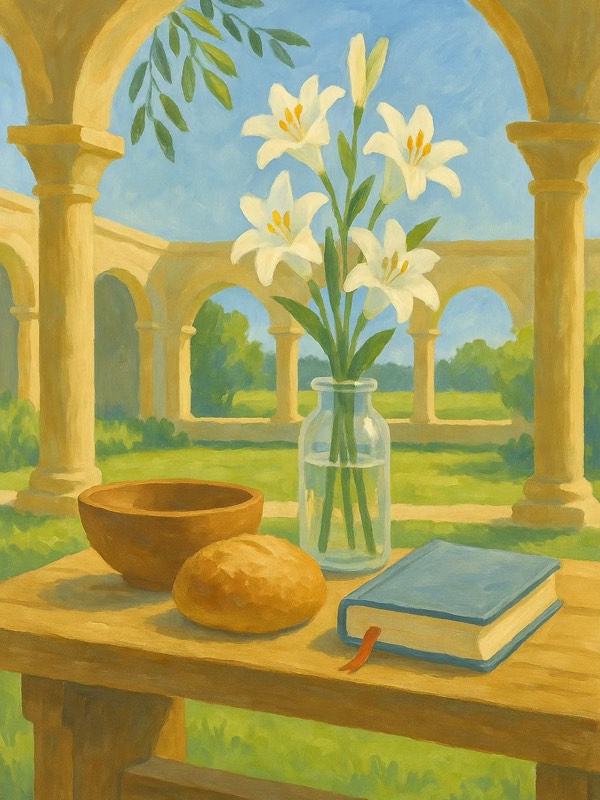
Hilda was born in 614 into the royal family of Northumbria, in northern England. At thirteen she was baptised at York with her great-uncle, King Edwin. At thirty-three she gave up her noble life to become a nun. She planned to join her sister in a convent in Gaul, but Bishop Aidan called her back to lead communities at home.
In 657 she founded the abbey at Whitby, a monastery for both men and women. Modelled on the first Christians in Acts, it had no rich or poor; everything was shared. Bede says kings and ordinary people sought her advice, and five future bishops trained there. In 664 Whitby hosted the synod that settled how Northumbria would date Easter. Hilda also welcomed Cædmon, a shy cowherd who began singing Bible stories in verse, the first English poet whose name we know.
She died in 680 after six years of illness, still teaching. Everyone who knew her, Bede writes, called her “mother.”
The multitude of believers was one in heart and soul. No one claimed that any of his possessions was his own, but they shared everything they owned.
Acts 4:32 · BSB
A prayer
Faithful God, you gave Hilda wisdom to lead, generosity to share all things, and an eye for the gifts hidden in others. Help us to build communities where no one is overlooked, to seek peace when we disagree, and to welcome every voice that praises you. Through Jesus Christ our Lord. Amen.
The lives are written with AI help from public-domain histories and checked before publishing; the prayers are ours. Bible quotations are from the Berean Standard Bible (BSB), in the public domain. How we write.