December 17
The saints and feasts remembered on December 17, each with a short life, a Bible passage and a prayer.
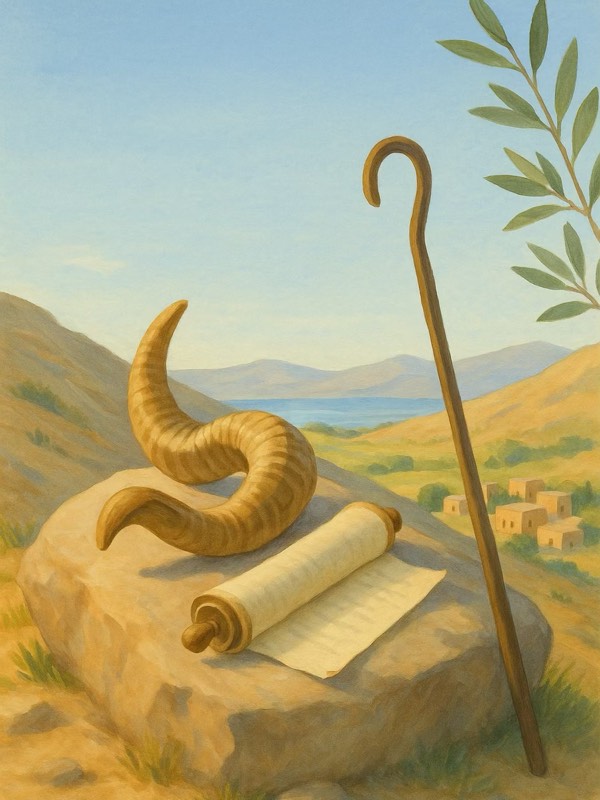
Daniel and the Three Young Men
Stayed faithful to God in Babylon, through the furnace and the lions' den
The Book of Daniel tells of four young Jews taken from Jerusalem to Babylon in the 6th century BC: Daniel, Hananiah, Mishael and Azariah, whom the court renamed Belteshazzar, Shadrach, Meshach and Abednego. Chosen to serve King Nebuchadnezzar, they asked to live on vegetables and water rather than eat the king’s food. Many scholars think the book took its final form around 165 BC, when Jews again faced persecution for their faith.
Its best-known stories show what faithfulness cost. The three friends refused to bow before a golden statue and were thrown into a blazing furnace. Daniel kept praying to God three times a day despite a royal ban and was thrown to the lions. In both stories they come out unharmed.
Christians remember them as people who stayed loyal to God far from home, under rulers who demanded otherwise. Catholic and Orthodox Bibles also include the song the three sang in the fire, which is still sung in worship.
If the God whom we serve exists, then He is able to deliver us from the blazing fiery furnace and from your hand, O king. But even if He does not, let it be known to you, O king, that we will not serve your gods or worship the golden statue you have set up.”
Daniel 3:17–18 · BSB
A prayer
God of our ancestors, you kept Daniel and his three companions faithful in a foreign land and stood with them in the fire and among the lions. Give us courage to stay true to you when it costs us, and to trust you whether or not we see a rescue. Amen.
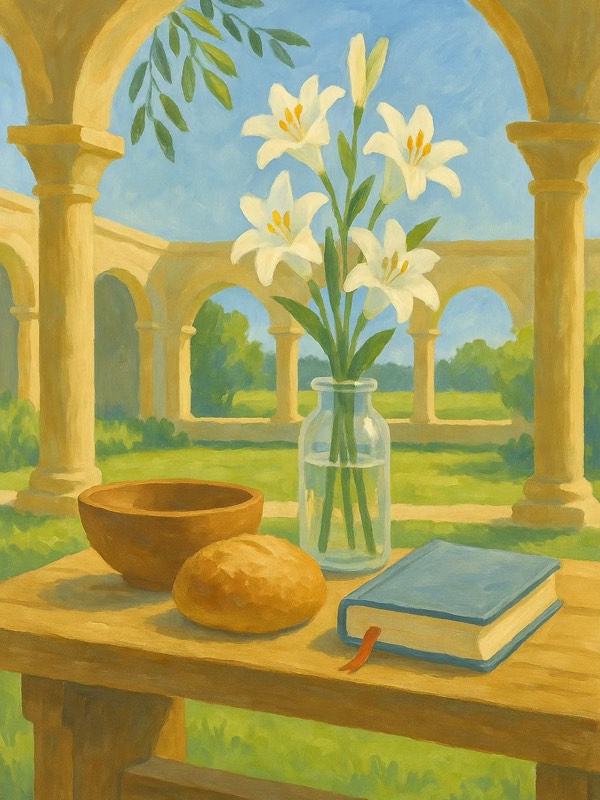
Saint John of Matha
Founded the Trinitarians to ransom Christians held captive across the sea
John of Matha was born in Provence, in southern France, probably in the mid-twelfth century. He studied theology in Paris and was ordained a priest there. Little is certain about his early life; tradition says a vision at his first Mass turned his heart toward captives.
In his day, wars around the Mediterranean left thousands of Christians enslaved in North Africa and Muslim Spain, just as many Muslims were enslaved in Christian lands. John gathered a community to buy captives back, and in 1198 Pope Innocent III approved its rule. The brothers, called Trinitarians, set aside a third of their income for ransoms and also cared for the poor and sick. John spent his last years in Rome, where he died in 1213.
His work outlived him for centuries. In 1580 Trinitarian friars paid the ransom of a Spanish soldier held in Algiers: Miguel de Cervantes. John is remembered as a man who saw people in chains and did something practical about it.
“The Spirit of the Lord is on Me, because He has anointed Me to preach good news to the poor. He has sent Me to proclaim liberty to the captives and recovery of sight to the blind, to release the oppressed, to proclaim the year of the Lord’s favor.”
Luke 4:18–19 · BSB
A prayer
God of freedom, you moved John of Matha to give his life to ransoming captives and caring for the poor. Open our eyes to those who are trapped and forgotten in our own time, and give us generous hearts and willing hands to help set them free, through Jesus Christ our Lord. Amen.
The lives are written with AI help from public-domain histories and checked before publishing; the prayers are ours. Bible quotations are from the Berean Standard Bible (BSB), in the public domain. How we write.