December 31
The saints and feasts remembered on December 31, each with a short life, a Bible passage and a prayer.
Saint Sylvester I
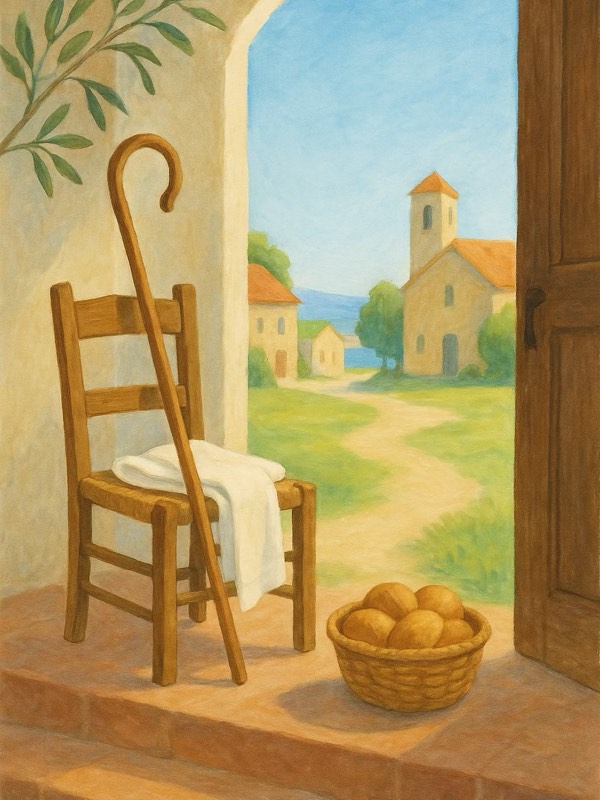
Led the Church of Rome as persecution ended and the first basilicas rose
Sylvester was a priest of Rome who became its bishop in January 314, not long after Emperor Constantine had ended the persecution of Christians. Almost nothing is known of his early life. He led the Roman church for nearly twenty-two years, until his death on 31 December 335.
His time was one of huge change. Christians who had once met in private houses could now worship openly, and great basilicas rose in Rome, including the Lateran and the first St Peter's, paid for by the emperor. Sylvester did not attend the councils of Arles (314) or Nicaea (325), but he sent representatives to both. Later legends claimed he healed Constantine and baptised him, and a forged document, the “Donation of Constantine”, used his name; historians have shown both are untrue.
He was buried in the Catacomb of Priscilla and was among the first people honoured as saints in Rome without being martyrs. In several countries, New Year's Eve still bears his name.
Be shepherds of God’s flock that is among you, watching over them not out of compulsion, but because it is God’s will; not out of greed, but out of eagerness; not lording it over those entrusted to you, but being examples to the flock. And when the Chief Shepherd appears, you will receive the crown of glory that will never fade away.
1 Peter 5:2–4 · BSB
A prayer
God of every age, when persecution gave way to peace, you gave your Church in Rome a faithful shepherd in Sylvester. As this year comes to its end, help us to use our times of freedom and change to build up your people in truth and love. Through Jesus Christ our Lord. Amen.
Saint Catherine Labouré
Kept secret for 46 years that she was the nun of the Miraculous Medal
Catherine Labouré was born in 1806 into a farming family at Fain-lès-Moutiers in Burgundy. Her mother died when she was nine, and as a girl she ran the household for her father, who at first opposed her wish to become a nun. In 1830 she joined the Daughters of Charity in Paris.
That same year, as a novice, she told her confessor that the Virgin Mary had appeared to her in the convent chapel and asked that a medal be made. With the archbishop's approval it was first struck in 1832, and it spread so quickly that people called it the “Miraculous Medal.” Catherine kept her part a secret. For more than forty years she worked at a home for elderly men on the edge of Paris, caring for residents, minding the hens and answering the door.
Only shortly before her death on 31 December 1876 did she speak openly to her superior. She was canonised in 1947. Christians remember her for a faith lived quietly in ordinary work.
Set your minds on things above, not on earthly things. For you died, and your life is now hidden with Christ in God.
Colossians 3:2–3 · BSB
A prayer
Faithful God, you gave Catherine Labouré a humble heart that served the old and the poor for many years without seeking notice. Teach us to love you in hidden and ordinary tasks, to keep our hearts set on you, and to serve others gladly, through Jesus Christ our Lord. Amen.
The lives are written with AI help from public-domain histories and checked before publishing; the prayers are ours. Bible quotations are from the Berean Standard Bible (BSB), in the public domain. How we write.