January 20
The saints and feasts remembered on January 20, each with a short life, a Bible passage and a prayer.
Saint Fabian
Layman chosen as bishop of Rome who led his church until martyrdom
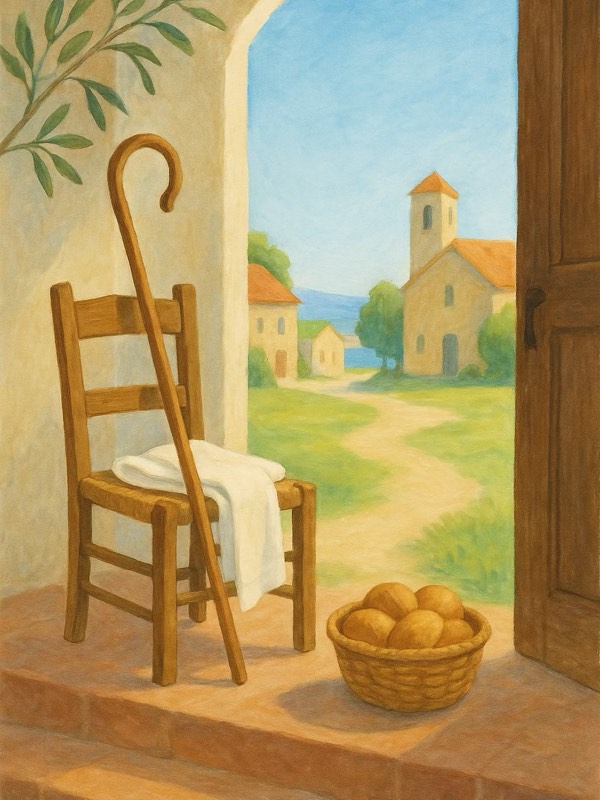
Fabian was a Roman layman when the Christians of Rome met in 236 to choose a new bishop. Eusebius of Caesarea, writing about eighty years later, says he had come from the countryside and that nobody had him in mind. Then, Eusebius reports, a dove settled on his head, and the crowd took it as a sign and chose him.
He led the Roman church for about fourteen fairly peaceful years. Some early records say he divided the city into districts cared for by deacons, and that he brought home from Sardinia the bodies of Pope Pontian and the priest Hippolytus, who had died in exile there.
In 250 Emperor Decius began the first empire-wide persecution, demanding that everyone sacrifice to the gods. Fabian was among the first to die, on 20 January. Cyprian of Carthage praised his death. Christians remember him as an unlikely choice who stayed faithful to the end. His tomb, with his name carved in Greek, can still be seen in Rome’s Catacomb of Callixtus.
Be shepherds of God’s flock that is among you, watching over them not out of compulsion, but because it is God’s will; not out of greed, but out of eagerness; not lording it over those entrusted to you, but being examples to the flock. And when the Chief Shepherd appears, you will receive the crown of glory that will never fade away.
1 Peter 5:2–4 · BSB
A prayer
Faithful God, you called Fabian from an ordinary life to shepherd your people in Rome, and you gave him courage to stay faithful when persecution came. Help us to accept the tasks you give us, even unexpected ones, to care for one another with patience, and to hold fast to you in every trial. Amen.
Saint Sebastian
Roman martyr remembered in art as the young soldier pierced by arrows
Sebastian was a Christian put to death in Rome. Tradition places his death around 288, under Emperor Diocletian, but the year is uncertain; Diocletian's great persecution began only in 303. The firm facts are few. A Roman calendar from 354 lists him on 20 January, and he was buried in a cemetery on the Appian Way, where a church bearing his name still stands. Saint Ambrose, writing in the 300s, says he came from Milan.
Most of his story comes from an account written more than a century later. It says he was an officer in the emperor's guard who quietly helped imprisoned Christians. When he was found out, he was tied up and shot with arrows. He survived and was nursed by a widow named Irene, then faced the emperor again and was beaten to death.
That image of a young man pierced by arrows became one of the most painted scenes in Christian art. In times of plague, many people turned to his memory for courage.
Who shall separate us from the love of Christ? Shall trouble or distress or persecution or famine or nakedness or danger or sword? As it is written: “For Your sake we face death all day long; we are considered as sheep to be slaughtered.” No, in all these things we are more than conquerors through Him who loved us.
Romans 8:35–37 · BSB
A prayer
God of all faithfulness, you gave your servant Sebastian the courage to stand by Christ and by his fellow believers, even at the cost of his life. Give us steady hearts when following you is hard, and make us brave in caring for those who suffer. Through Jesus Christ our Lord. Amen.
Sarah
Waited into old age for God’s promise and became the mother of Isaac
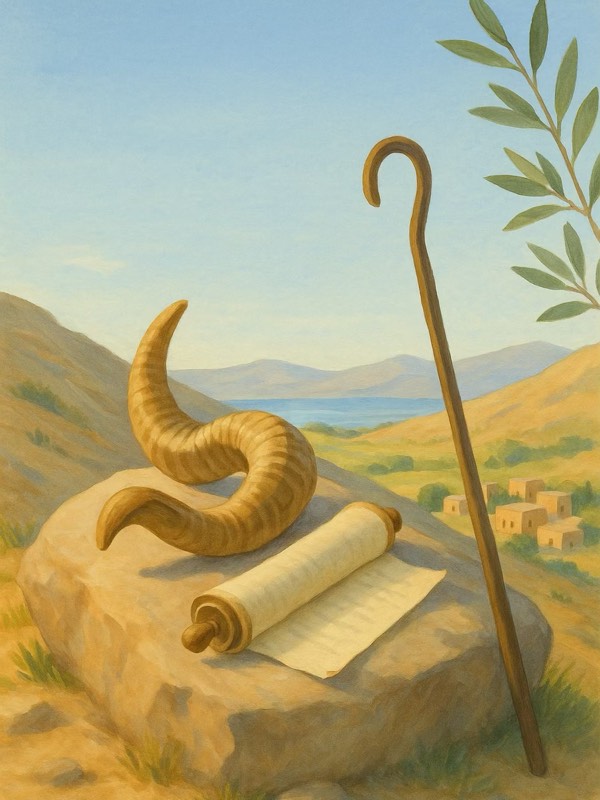
Sarah’s story is told in Genesis, the first book of the Bible; it is a family history of Israel’s beginnings, and its events cannot be dated with certainty. At first called Sarai, she was the wife of Abram. Genesis says the family left Ur, moved to Haran, and then, at God’s call, Abram and Sarai set out for Canaan, living in tents as strangers.
The hardest part of her life was waiting. For years she had no children. She gave her servant Hagar to Abram, and the arrangement brought jealousy and pain to both women. When Sarah was old, God gave her a new name and promised a son. Listening behind the tent door, she laughed, then, afraid, said she hadn’t. Yet she gave birth to Isaac, whose name recalls laughter. She died at Hebron and was buried there.
Christians remember Sarah as a mother of God’s people. The Letter to the Hebrews names her among those who trusted God’s promise.
And the LORD asked Abraham, “Why did Sarah laugh and say, ‘Can I really bear a child when I am old?’ Is anything too difficult for the LORD? At the appointed time I will return to you—in about a year—and Sarah will have a son.”
Genesis 18:13–14 · BSB
A prayer
Faithful God, you kept your promise to Sarah through long years of waiting and turned her doubtful laughter into joy at the birth of Isaac. When your promises seem slow and our hope grows tired, give us the patience to wait and the trust to believe that nothing is too hard for you. Amen.
Saint Wulfstan of Worcester
English bishop who kept his see after 1066 and preached against the slave trade
Wulfstan was born around 1008 in Warwickshire, England, and became a monk at Worcester, where he served as prior. In 1062 he was made bishop of Worcester. Four years later the Normans conquered England, and nearly every English bishop was replaced. Wulfstan was the most notable exception: he accepted the new king, William, and kept his diocese until his death on 20 January 1095, outliving every other bishop appointed before the Conquest.
He was known as a tireless pastor who travelled his diocese, preached, and lived simply. With the support of Archbishop Lanfranc, he preached repeatedly at Bristol against the trade in English slaves shipped to Ireland, and the traffic there was largely stopped. He also began rebuilding Worcester Cathedral; his biographer records that he wept as the old church built by earlier saints was pulled down.
Wulfstan is remembered as a bridge between Anglo-Saxon and Norman England, and as a bishop who used his voice for people who had none.
Isn’t this the fast that I have chosen: to break the chains of wickedness, to untie the cords of the yoke, to set the oppressed free and tear off every yoke? Isn’t it to share your bread with the hungry, to bring the poor and homeless into your home, to clothe the naked when you see him, and not to turn away from your own flesh and blood?
Isaiah 58:6–7 · BSB
A prayer
God of justice and mercy, you gave your servant Wulfstan a shepherd’s heart in a time of conquest and change, and courage to speak for those sold as slaves. Make us faithful in our own work, simple in our way of life, and bold to stand with all who are oppressed. Amen.
The lives are written with AI help from public-domain histories and checked before publishing; the prayers are ours. Bible quotations are from the Berean Standard Bible (BSB), in the public domain. How we write.