
January 25
The saints and feasts remembered on January 25, each with a short life, a Bible passage and a prayer.
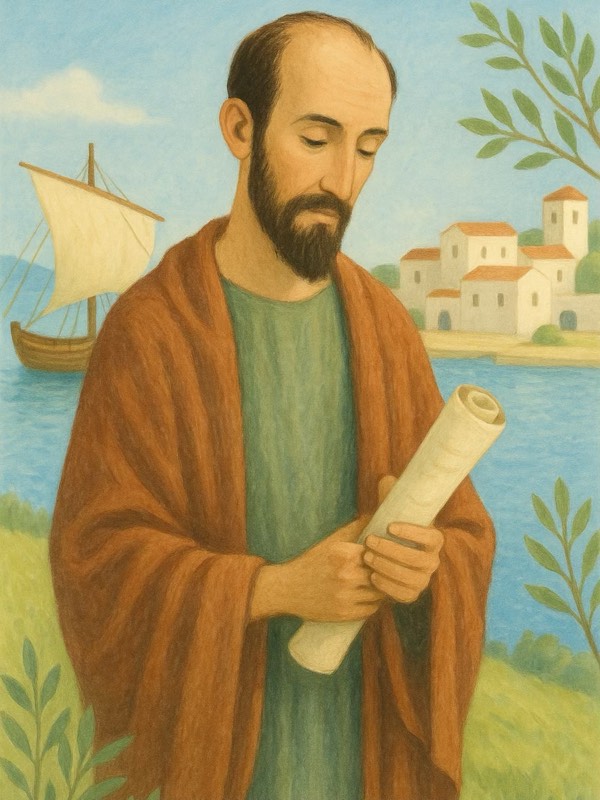
Conversion of Saint Paul
The persecutor who met the risen Jesus on the road to Damascus
Saul was a Jew from Tarsus, in today’s southern Turkey, trained as a Pharisee and fiercely devoted to the Law. A few years after Jesus’ death, he set out to crush the new movement of Jesus’ followers and headed for Damascus in Syria to arrest any he found there.
According to the Book of Acts, a light from heaven threw him to the ground on the road, and a voice asked, “Saul, Saul, why do you persecute me?” It was Jesus. Blinded, Saul was led into the city, where for three days he neither ate nor drank. A believer named Ananias, wary of Saul’s reputation, came anyway, laid hands on him, and baptised him. Paul himself later wrote simply that God chose to reveal his Son to him.
The persecutor became the Church’s great missionary to non-Jews. Western Christians have kept this feast since the early Middle Ages, and today it closes the Week of Prayer for Christian Unity.
As Saul drew near to Damascus on his journey, suddenly a light from heaven flashed around him. He fell to the ground and heard a voice say to him, “Saul, Saul, why do you persecute Me?” “Who are You, Lord?” Saul asked. “I am Jesus, whom you are persecuting,” He replied. “Now get up and go into the city, and you will be told what you must do.”
Acts 9:3–6 · BSB
A prayer
God of mercy, on the road to Damascus you turned Saul, who persecuted your Church, into Paul, the apostle who carried the Gospel to the nations. Open our eyes as you opened his, turn our hearts toward you, and make us bold witnesses to your grace wherever you send us. Through Jesus Christ our Lord. Amen.

Saint Ananias of Damascus
Greeted Saul, the persecutor of believers, as a brother
Ananias was a follower of Jesus living in Damascus, in Syria, a few years after the resurrection. Everything we know about him comes from the Acts of the Apostles, which describes him as a devout man, faithful to the Jewish law and respected by the Jews of the city.
According to Acts, the Lord spoke to him in a vision and told him to find Saul of Tarsus, who was staying in a house on Straight Street. Ananias objected, and candidly: this was the man who had come to arrest believers. Still, he went. He laid his hands on the blind Saul and greeted him as “Brother Saul.” Saul’s sight returned, and he was baptised.
Later traditions say Ananias led the church in Damascus and died a martyr, but these stories cannot be confirmed. What remains is one act of trust. Christians remember him because the apostle Paul’s new life began with a believer who questioned God’s command, then obeyed and called his enemy brother.
“Go!” said the Lord. “This man is My chosen instrument to carry My name before the Gentiles and their kings, and before the people of Israel. I will show him how much he must suffer for My name.” So Ananias went to the house, and when he arrived, he placed his hands on Saul. “Brother Saul,” he said, “the Lord Jesus, who appeared to you on the road as you were coming here, has sent me so that you may see again and be filled with the Holy Spirit.”
Acts 9:15–17 · BSB
A prayer
Faithful God, you sent your servant Ananias, despite his objections, to lay hands on Saul and call him brother. Give us the same courage to obey your voice, to welcome those we find hard to trust, and to believe that no one is beyond the reach of your mercy, through Jesus Christ our Lord. Amen.
The lives are written with AI help from public-domain histories and checked before publishing; the prayers are ours. Bible quotations are from the Berean Standard Bible (BSB), in the public domain. How we write.