
October 17
The saints and feasts remembered on October 17, each with a short life, a Bible passage and a prayer.

Saint Ignatius of Antioch
Wrote seven letters to fellow Christians on his way to martyrdom in Rome
Ignatius was bishop of Antioch in Syria, one of the first great Christian cities, around the beginning of the second century. Little is known about his early life; a later tradition links him to the apostles. Most of what we know comes from his own letters.
Arrested during a persecution, probably under the emperor Trajan, he was taken under armed guard to Rome to be executed. On the long journey, Christians came out to meet him, and he wrote seven letters: six to churches and one to Polycarp, bishop of Smyrna. He urged them to stay united around their bishops and to hold firmly that Jesus truly became human. He begged the Christians of Rome not to try to save him, calling himself “God’s wheat.” He was martyred in Rome around 110; tradition says he was killed by wild beasts.
His letters are among the oldest Christian writings outside the New Testament, and they are the earliest known to speak of the “catholic” Church.
Truly, truly, I tell you, unless a kernel of wheat falls to the ground and dies, it remains only a seed; but if it dies, it bears much fruit.
John 12:24 · BSB
A prayer
Faithful God, you gave your servant Ignatius the courage to follow Christ to death and to strengthen the churches with his letters along the way. Keep us united in your Church, steady in times of trouble and ready to give our lives to you, through Jesus Christ, the grain of wheat that bears much fruit. Amen.
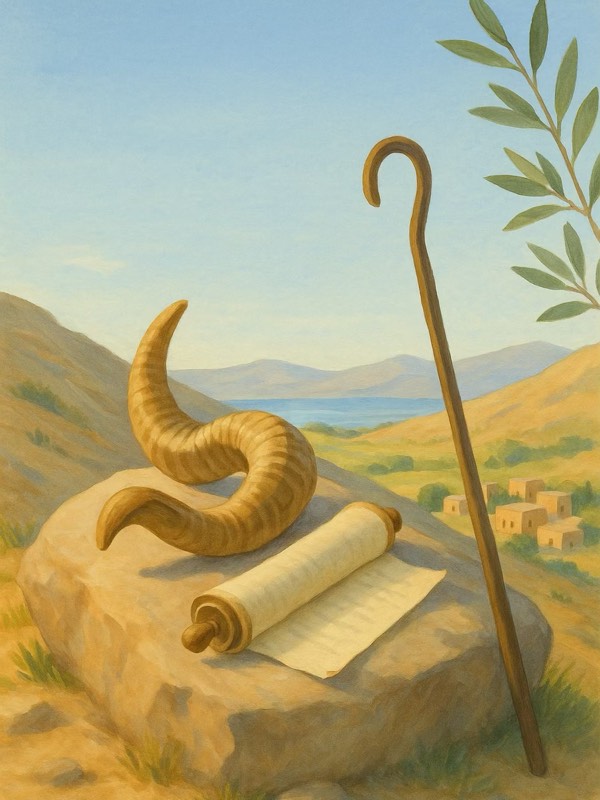
Saint Hosea
Prophet who saw God's faithful love in his own broken marriage
Hosea was a prophet in the northern kingdom of Israel in the eighth century BC, from the prosperous years of King Jeroboam II into the turbulent decades before Samaria fell to Assyria in 722 BC. Almost everything we know of him comes from the book that bears his name.
The book says he married Gomer, who was unfaithful, and that God told him to give the children born in that home names that warned the nation, such as Lo-ammi, “not my people.” God then told him to love an adulterous woman, and he paid to take her in; many readers think she was Gomer. In this heartbreak Hosea saw a picture of God's love for an Israel that kept chasing other gods. Scholars debate how literal the story is.
Christians remember Hosea because he spoke of God as a wounded but faithful husband and a tender parent. Jesus twice quoted his words “I desire mercy, not sacrifice,” and Matthew applied his “Out of Egypt I called my son” to Jesus.
For I desire mercy, not sacrifice, and the knowledge of God rather than burnt offerings.
Hosea 6:6 · BSB
A prayer
Faithful God, through the prophet Hosea you showed that your love does not give up on those who wander from you. When we are unfaithful, call us home again, and teach us to love others with the same patient mercy that you desire more than any offering. Through Jesus Christ our Lord. Amen.
The lives are written with AI help from public-domain histories and checked before publishing; the prayers are ours. Bible quotations are from the Berean Standard Bible (BSB), in the public domain. How we write.